
The New Yorker
Fifty years after astronauts first landed on the moon, space lawyers are debating how outer space should be governed.
A collaboration with PBS American Experience.

New York Times
Offended by lyrics they deemed too sexual and too violent, Tipper Gore and Susan Baker campaigned to put warning labels on record albums in 1985. Years later, warning labels are showing up in unexpected places.

New York Times
Cartoonist Al Jaffee has been causing mischief at MAD Magazine for six decades. He's as irreverent — and as original — as ever. (A Retro Report mini doc produced in connection with “Sex, Drugs and Gore.”)
New York Times version here.

PBS | American Experience
Science has brought the moon into sharp focus, but will we ever understand its mesmerizing power of attraction?
PBS American Experience version here.

New York Times
Colony Collapse Disorder put honeybees in the headlines. But the story is more complicated than originally suspected.

New York Times
When "Free Willy” became a hit, activists and fans campaigned to release the movie's star. Their efforts spawned a story not even Hollywood could invent.

New York Times
Politicians opine on the perils of popular culture. (A Retro Report mini doc produced in connection with “Sex, Drugs and Gore.”)
New York Times version here.

New York Times
With dreams of space colonization, eight people sealed themselves inside a giant glass dome in 1991. Emerging two years later, they had “suffocated, starved and went mad.”

Retro Report Mini Doc
The early science of psychedelics was "kind of a Wild West free-for-all." The U.S. Army even gave LSD to a cat.
New York Times facebook version here.

New York Times
A panic over Pinball? Really? (A Retro Report mini doc produced in connection with “Sex, Drugs and Gore.”)
New York Times version here.

New York Times
The Y2K bug threatened to wipe out computers and disrupt modern society. We all remember the doomsday hype, but what really happened?

New York Times
In 1981, an invasive fruit fly threatened California’s $14 billion agricultural industry, pitting farmers against environmentalists.
New York Times
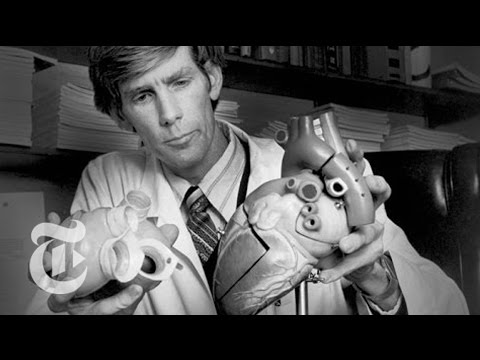
The artificial heart was a media sensation in the 1980s, raising hope and spreading controversy. Today, its impact on medical science continues to surprise.
New York Times
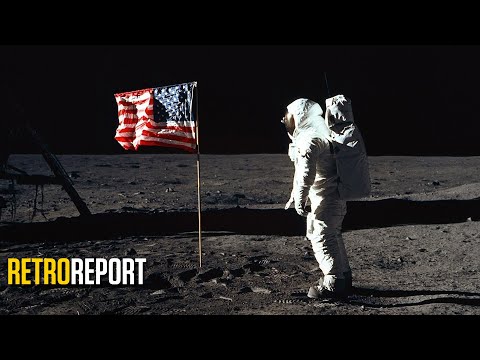
To reach the moon, NASA had to market the mission. Here’s how the agency sold both the scientific significance and the glamour of space travel to a skeptical public.
New York Times Version here.

PBS | American Experience
Wireless power seems cutting edge, but it was actually pioneered more than 100 years ago by Nikola Tesla. How is his technology being used today?

PBS | American Experience
The origins of the Pilates workout can be traced back to a British internment camp in World War I.

PBS | American Experience
How does the oldest subway in America maintain equipment dating back to the early 1900s?
PBS broadcast and New York Times
In the 1960s, mind-altering drugs like LSD helped fuel the counter-culture. Today, psychedelics are turning on a new generation — of scientists.
PBS broadcast edit. New York Times version here.